Autumn Term
Week ending: 28th November 2025
What a wonderful two weeks it has been in Year 4! The children have shown fantastic enthusiasm, curiosity and creativity across all areas of their learning and we are incredibly proud of the progress they are making.
In English, the class has been diving into The Selfish Giant by Oscar Wilde. The story has sparked some brilliant discussions and the children have produced two contrasting descriptions about the giant’s garden- one before and one after he banished the children. It has been a pleasure to read their work; the vocabulary they used to show the change in atmosphere was truly impressive!
During whole-class reading, the children have been learning about inspiring figures from the book Awesome Men. This week, their focus was on Albert Einstein. They enjoyed discovering who he was, what he achieved, and why his work continues to be important today. Next week, they will move on to a new theme—puffins—exploring the beautiful book Finding Home by Mike Unwin and Jenni Desmond.
In Maths, Year 4 has been exploring area by counting squares and comparing spaces. This practical work has helped the children build strong foundations as we prepare to move on to our next unit - multiplication. They have approached these lessons with great focus and teamwork.
Our new Science topic, States of Matter, is now underway. The children have begun investigating the differences between solids, liquids, and gases and they have already shown great interest in how materials behave and change.
It has been a busy, productive fortnight in Year 4 and we look forward to seeing the children continue to shine in the weeks ahead!
Week ending: 24th October 2025
In English, we have been learning about the features of non-chronological reports. The children looked closely at how information can be organised under clear subheadings, how to include interesting facts and how to use formal language to inform the reader. Using these skills, everyone wrote their own non-chronological report based on the Space-Bat-Angel-Dragon from our book, The Iron Man.
To finish our unit, the children planned and wrote their own alternative endings to the story. Some decided that Iron Man should be celebrated as a hero by the villagers, while others created a dramatic ending where the Space-Bat-Angel-Dragon destroyed the world! It was wonderful to see the creativity and imagination shining through every piece of writing.
Over the last few weeks, we have also had a very special online author session with Liz Pichon, the author of the Tom Gates series. During this session, the children had the opportunity to draw characters from her new book, The Mumbles. Everyone produced some fantastic artwork which is now proudly displayed in our classroom for everyone to enjoy!
In Maths, we have been learning how to compare and order numbers, using place value to help us explain our reasoning. In addition, we have also explored Roman numerals, discovering how they work, what the different symbols mean and where we might see them in real life – such as on clocks or in film titles!
In Science, our learning has continued with the topic of the digestive system, where we have looked closely at how the human body digests food and then explored the diets of different animals. This week, the children enjoyed classifying animals into herbivores, omnivores and carnivores, using examples from the animal kingdom to support their choices.
It has been a fantastic fortnight of learning, full of curiosity, creativity and brilliant ideas. Well done, everyone, for all your hard work and enjoy your half-term break!
Week ending: 3rd October 2025
This week in Maths, we have been very busy exploring number lines up to 1,000 and even 10,000! We have been understanding how to spot the mid-point and work out the differences between each interval on the line. At first, it was a bit tricky but we soon became confident at finding the halfway point and recognising what each interval was worth.
Understanding the mid-point has been especially important because it has helped us get ready for our next challenge: rounding numbers to the nearest 10, 100 and 1,000. We now know that multiples and midpoints are the key to deciding whether to round a number up or down. For example, if a number is on or just past the middle, it will round to the higher multiple but if it is before the middle, it will round to the lower one.
In English, we are preparing to use our persuasive voices to write a letter in role as angry farmers whose machinery has been eaten and destroyed by the colossal Iron Man. Last week, we had an excellent debate to prepare us for this, sharing ideas about how the farmers might feel and what they could ask the council to do. This has really helped us think about how to convince others using strong language, emotions and repetition.
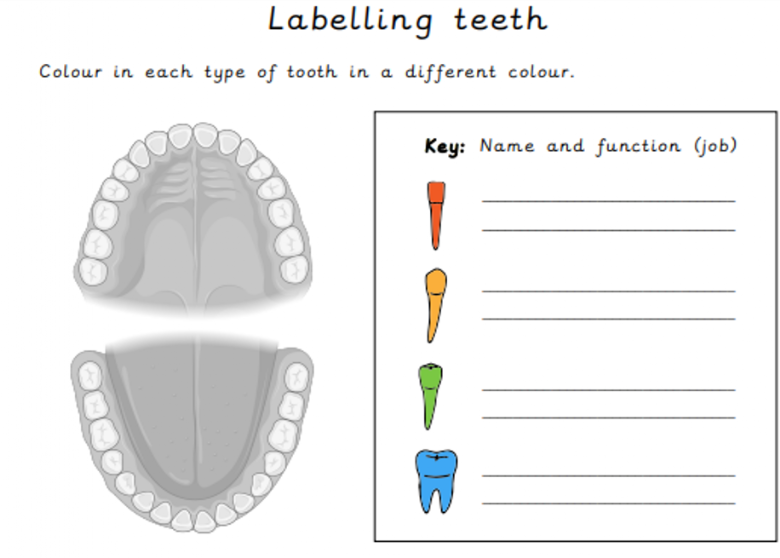
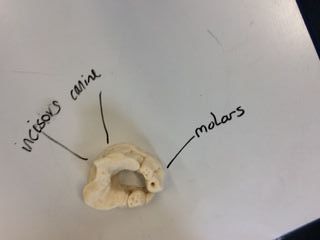
In Science, we have been learning all about teeth. We have explored the different types of teeth and their purposes – and we even moulded our own excellent examples of incisor, molar, and canine teeth. It was great fun to see how different teeth are shaped and to understand the importance of each role for chewing, biting, tearing and grinding.

Week ending: 19th September 2025
Well done Year 4 on what has been a fantastic start to the new term!
As we embark on another new year at Winhills, Jordan Class have been working hard to showcase their understanding of sentence construction and grammar. I have been impressed with their knowledge of different conjunctions, such as co-ordinating and subordinating. From this, the children have applied these classes of words in their writing and shown the ability to write both complex and compound sentences. Well done!
In Maths, the children have begun exploring numbers from 1,000 to 10,000 using Base 10, Place Value Charts, Gattegno Charts as well as other manipulatives to support their learning. Furthermore, they have been showing good understanding of how to partition numbers using part-whole models as well as sentence stems.
In History, we have started to explore the chronology of pre-history to help with understanding the period of The Stone Age and how this was divided into different periods. This week, the children looked at secondary sources to determine how archaeological evidence can help historians understand the past.